When a developer in Manhattan is evaluating contractors for a $5M gut renovation, they’re not making that decision based on a website bio and a list of services. They want to know what you’ve actually built, how you handled complications, and whether the people who hired you would hire you again. A well-written case study answers all three questions before the first phone call.
Case studies are one of the most underused marketing tools in the New York construction industry – and one of the most effective. This article explains how to structure them, what to include, and how to put them to work across your sales process.
Why Case Studies Work Differently Than Other Marketing Content
Most construction marketing talks about what a company does. Case studies show what a company has done – with real stakes, real timelines, and real outcomes. That shift from general to specific is what makes them persuasive to experienced buyers.
Decision-makers in commercial construction are skeptical by nature. They’ve been burned by contractors who overpromised and underdelivered. They’re evaluating risk as much as capability. A case study that walks through a technically demanding project – including the challenges that came up and how you managed them – communicates something a capabilities statement never could: that your team knows how to handle complexity, not just describe it.
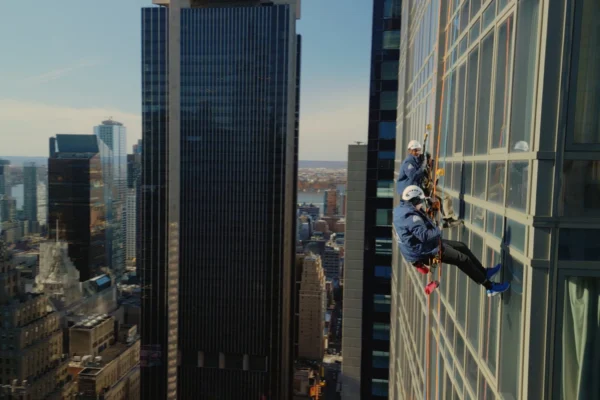
This is especially true in New York City, where projects routinely involve NYC DOB permit processes, landmark preservation requirements, occupied building logistics, or tight phasing constraints in dense urban environments. A case study set in Midtown or Williamsburg, with those specific constraints named and addressed, will resonate with a local developer far more than a generic portfolio photo.
The Structure That Actually Converts
A case study that generates business follows a clear arc. It’s not a project summary – it’s a story with a beginning, a middle, and a measurable end.
The most effective construction case studies follow this structure:
- The client and context – Who was the client, what type of property or project, and where in NYC? Even a single sentence anchors the reader: “A 12-story mixed-use building in the Meatpacking District undergoing full façade restoration while fully occupied.”
- The challenge – What made this project difficult? Budget constraints, tight timeline, structural complications, regulatory requirements, coordination with other trades? Be specific. Vague case studies (“we overcame several challenges”) do nothing.
- Your approach – What decisions did your team make, and why? This is where you demonstrate expertise. Walk through your sequencing logic, your materials choices, your coordination strategy. Buyers who understand construction will read this closely.
- The result – Delivered on time? Under budget? Zero stop-work orders? A specific outcome carries real weight. “Completed 3 weeks ahead of schedule with no lost-time incidents across 14 months of work” is a closer.
- The client perspective – A brief quote from the owner, project manager, or developer adds human credibility. It doesn’t need to be long. One direct sentence from a named contact at a real company is worth more than a paragraph of your own copy.
What to Document – And When
The biggest reason NYC construction companies don’t have good case studies isn’t that they lack great projects. It’s that they don’t capture the right information during the project, and by the time it wraps up, the details are scattered across emails and site reports.
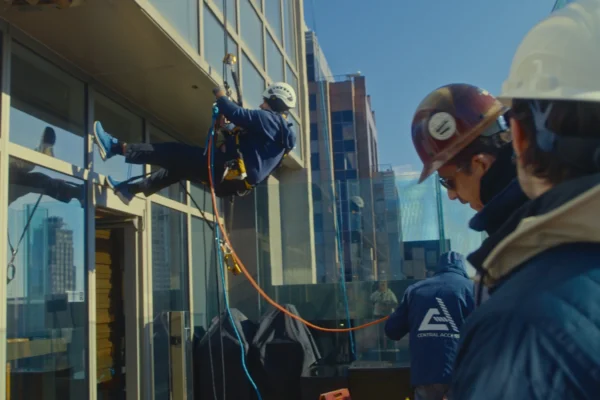
Start documenting during the project, not after. The most useful material – photos of phasing, records of a tricky structural decision, the moment a scheduling conflict got resolved – exists in real time. Once the scaffolding comes down, most of it is gone.
A practical approach: designate someone on your team to capture project milestones with photos and brief notes at regular intervals. You don’t need a professional crew on site every week. A phone photo of a key progress moment, combined with a few sentences of context, is enough raw material for a compelling written case study later.
For your highest-profile projects – the ones that best represent the work you want to win more of – professional project photography documentation makes a significant difference. Finished work shot properly, with good light and intentional framing, elevates the entire case study and makes it usable across your website, proposals, and presentations.
How Many Case Studies Do You Actually Need?
You don’t need twenty. You need the right three to five – each one representing a service line or project type that you want to win more of.
If you’re a general contractor who wants to grow your commercial tenant improvement work in Midtown, one detailed case study of a recent TI project in that market is worth more than a gallery of thirty residential photos. Match your case studies to your targets, not to your full project history.
The goal is not to show everything you’ve ever built. The goal is to give the specific client you’re pursuing enough confidence to move forward. One case study that mirrors their project type, building class, and borough will do more work than a general overview of your company’s history.
This also means your case studies need to be findable. They should live on dedicated pages on your website – not buried in a PDF portfolio or accessible only through a “download our brochure” form. Each case study should be indexed by Google, linkable, and easy to share directly from a proposal email.
Using Case Studies Across Your Sales Process
A finished case study doesn’t just live on your website. It becomes a tool you use at every stage of a business development conversation.
Practical applications:
- Include a relevant case study link in your first response to an RFP or project inquiry
- Reference specific case studies during pre-bid meetings to demonstrate familiarity with similar project types
- Send a targeted case study as a follow-up after an initial site visit – “Based on what you showed us, I wanted to share how we handled a similar situation at [project name]”
- Use case studies as the foundation for thought leadership content – blog posts, LinkedIn articles, and industry commentary that position your firm as a go-to voice for a specific project type or trade
A case study used proactively is a sales tool. A case study sitting unpromoted on your website is just content. The difference is in how deliberately you put it in front of the right people at the right moment in their decision process.
The Simplest Way to Get Started
If you’ve never written a formal case study before, start with one project – ideally one that’s recently completed and represents the type of work you most want to grow.
Write it in plain language. Describe the project like you would to a colleague over coffee: what the job was, what made it tricky, how your team handled it, and what the outcome looked like. Then add the structure. Then get the photos. Then put it on your website.
One strong case study, done properly, will do more for your reputation than a year of generic posts. It gives potential clients something real to evaluate – and it gives your sales conversations a concrete anchor that no amount of general marketing copy can replicate.
In a market as competitive and relationship-driven as New York City construction, the firms that win aren’t always the ones with the lowest bid or the longest history. They’re the ones who can most clearly show what it looks like to work with them – and what happens when they do.