In New York City, competition in the construction industry is relentless. Whether you’re a general contractor in Brooklyn, a renovation specialist in Manhattan, or a masonry subcontractor working across the five boroughs, your website is often the first place a potential client checks you out – before they call, before they ask for references, before they invite you to bid.
The question isn’t whether you have a website. Most construction companies do. The real question is: does it actually work for your business? Does it turn visitors into leads, and leads into signed contracts?
This checklist walks you through every major element your NYC construction website needs to convert – from structure and design to copy and trust signals.
1. Your Homepage Passes the 5-Second Test
When someone lands on your homepage, they should instantly understand who you are, what you build, and where you operate. If they have to scroll or click to figure out whether you even work in the Bronx or do commercial fit-outs, you’ve already lost them.
A construction website that converts leaves no room for guessing. Your headline should answer the question a property manager, developer, or general contractor is actually asking. “Quality Work Since 1998” is not a headline – it’s a caption. Something like “Commercial Renovation Contractor Serving NYC – 300+ Projects Completed Across Manhattan and Brooklyn” tells the whole story in one line.
2. Mobile-First Is No Longer Optional
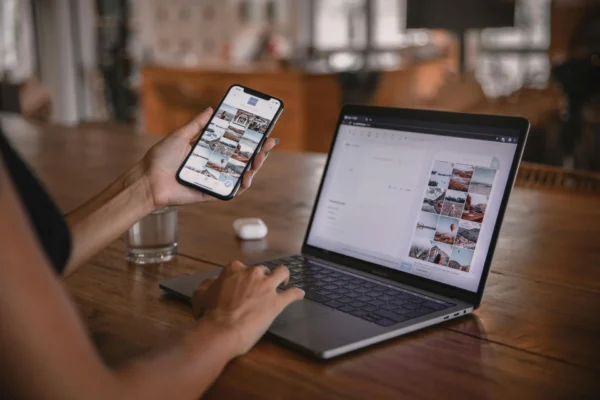
A large portion of construction-related searches in New York happen on mobile – think project managers checking subcontractors between meetings, or developers vetting vendors from a job site in Long Island City. If your site was designed for a desktop in 2015, you are losing real leads every single week.
A mobile-first approach is no longer optional in 2026. Proper mobile optimization affects your Google rankings, your bounce rate, and the number of people who actually contact you. Your phone number should be one tap away, your contact form should work without zooming, and the site should load in under three seconds. All of it, every time.
3. Show Your Work – With Real Project Photography
In the construction industry, visuals close deals. A project gallery featuring sharp, well-lit photos of your completed work is one of the highest-converting elements on any contractor’s website – especially in NYC, where clients often recognize the buildings, neighborhoods, and project types you’ve worked on.
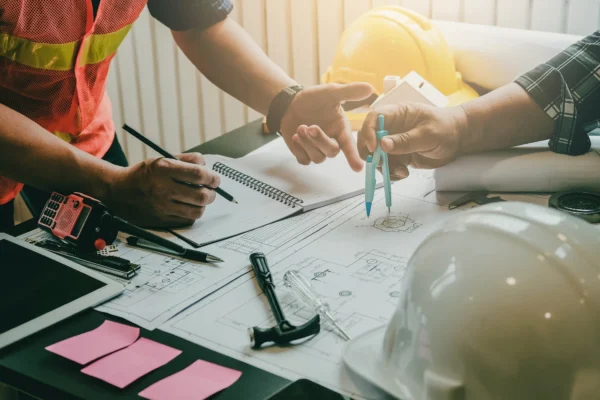
Generic stock photos of hard hats and blueprints signal nothing. Real on-site project photography – showing actual facades you’ve restored, interiors you’ve built out, or rooftops you’ve waterproofed in Queens or the South Bronx – builds credibility in seconds. It’s the visual equivalent of a reference letter.
4. An SEO-Friendly Structure That Gets Found Locally
New York is one of the most competitive local search markets in the country. Ranking for “general contractor NYC” is a years-long project. But ranking for “commercial fit-out contractor Midtown Manhattan” or “masonry subcontractor South Brooklyn” is realistic – and it puts you directly in front of clients who are already looking.
Local SEO matters more than most contractors realize. A proper SEO-friendly site structure means:
- Dedicated service pages for each of your core offerings – not one giant page listing everything you do
- Borough-specific or neighborhood-specific landing pages (Manhattan, Brooklyn, Queens, the Bronx, Staten Island, and where relevant, specific submarkets like DUMBO, Midtown South, or Astoria)
- Header tags, page titles, and meta descriptions that match what your target clients actually type into Google
- A logical internal linking structure that connects related services and project types
If your website is a single-page scroll with no clear hierarchy, it is essentially invisible to search engines – and to the clients who use them to find contractors.
5. Copy That Speaks to Real Decision-Makers
Most construction websites are written for no one in particular. They’re full of phrases like “we are committed to excellence” and “our clients are our priority.” That kind of language means nothing to a building owner evaluating three bids for a $3M renovation project.
Good website copywriting speaks directly to the person signing the contract – a property manager worried about schedule compliance, a developer tracking project costs against a tight margin, or a general contractor vetting subcontractors for a technically complex build. It addresses their real concerns: timeline, experience with NYC DOB regulations, track record with specific project types, and what you do when something goes sideways.
6. Trust Signals That Do the Heavy Lifting
You don’t win NYC construction contracts by having a polished homepage. You win them by proving you’re reliable, experienced, and worth the investment. Your website needs to do that work proactively – not just show up and look decent.
Key trust signals to include on your site:
- Licenses and certifications clearly displayed – NYC contractor license, NYC DOB registration, insurance certificates, bonding information. Don’t make potential clients ask for it.
- Named testimonials and project references – not generic quotes, but references tied to real companies, real building types, and real NYC neighborhoods whenever possible.
- Industry affiliations and recognitions – membership in the Building and Construction Trades Council of Greater New York, GBCA, or any relevant trade association tells clients you’re embedded in the local industry, not just passing through.
7. A Clear Contact Path – More Than Once
The biggest mistake construction websites make is burying the contact information. Your phone number should be in the header, on the footer, and on every service page. Your contact form should be one click away from anywhere on the site.
If you primarily serve commercial clients, consider adding a project inquiry form that asks the right qualifying questions upfront: project type, estimated scope, borough or neighborhood, and timeline. A lead who takes the time to fill out a structured inquiry is already further along the decision-making process than someone who sends a generic email – and that pre-qualification saves your team real time every week.
8. Project Case Studies That Convert Browsers Into Buyers
Service pages explain what you do. Project case studies show how you actually do it – and what clients experience working with you. A well-constructed case study that walks through a real NYC project (the challenge, the approach, the result) consistently outperforms a standard services page when it comes to converting serious prospects.
Even two or three strong case studies, tied to your highest-value service lines, can fundamentally change how potential clients assess your firm. They provide the narrative that raw credentials simply can’t deliver.
Quick Reference – The Conversion Checklist:
- Homepage communicates who you are, what you build, and where – within 5 seconds
- Site is fully mobile-optimized and loads fast on all devices
- Professional project photography is used throughout (no generic stock imagery)
- Dedicated service pages and borough-specific pages are in place for local SEO
- Copy addresses the real concerns of your target decision-makers
- Licenses, certifications, and affiliations are prominently displayed
- Contact information is visible on every page – header, footer, and service pages
- At least two or three project case studies are live and linked from key service pages
A website that doesn’t convert is a silent revenue leak. The good news is that fixing it rarely means starting from scratch – it means applying the right strategy to what you already have, and building from there with intention.