Strategy Presentation

Plenty of construction firms have paid for a strategy before. What arrived was a long document, full of charts, that someone opened once and then filed.

A strategy only creates value when the people running the business understand it and can picture what it looks like in practice.

That’s what this step is for. We present the plan to your team, walk through the thinking behind it, and answer the questions that come up in the room.

Why a Presentation, Not Just a Document

In most construction companies, marketing decisions involve more than one person. The owner, an operations lead, whoever handles business development, sometimes an office manager who ends up doing the posting. They’re busy, often on site, and rarely in the same room at the same time.

We also find that written strategy leaves too much to interpretation.

“Strengthen your positioning” means very little on its own. Seeing a mocked-up homepage headline, a sample project page, or two versions of how your company could describe itself makes the choice concrete – and much easier to approve or challenge.

The session is where disagreement is useful. If something doesn’t fit how you actually win work, we want to hear it before anything gets built.

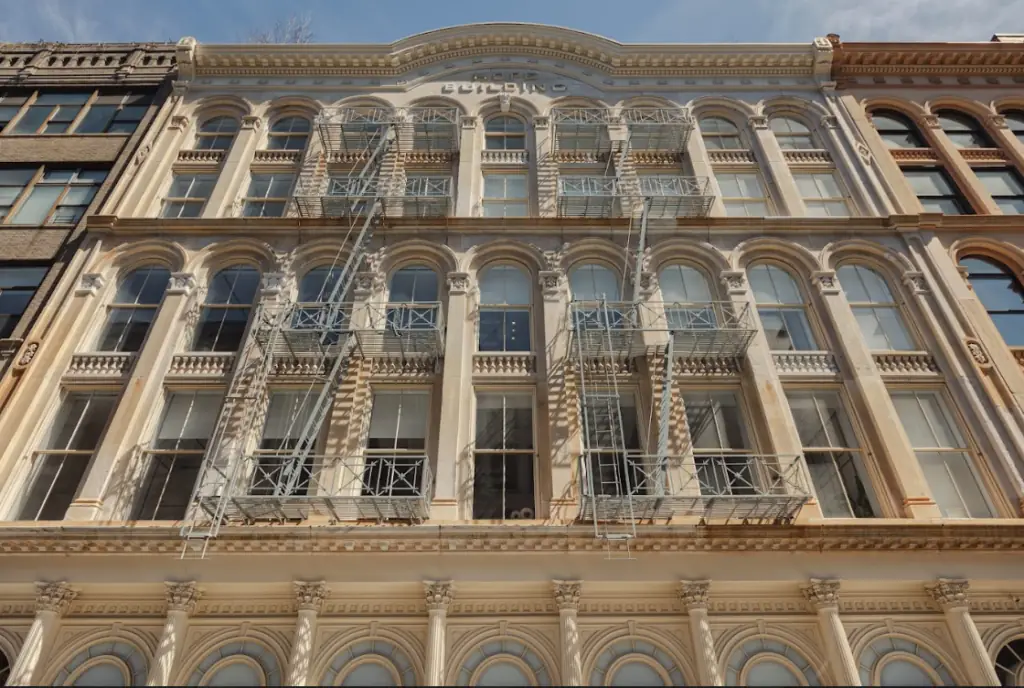
Close-up of an ornate historic building facade with fire escapes.
Highlighting the quality and detail in your construction work is key to effective content marketing.

If they don't share the same picture of the plan, the plan doesn't survive contact with a busy month.

What the Presentation Covers

The presentation pulls together everything from the earlier steps into one plan you can act on:

  1. Where you stand today. The key findings from your marketing audit and competitor research, summarized without the noise.
  2. Positioning and messaging direction. How your company should describe what it does, who it does it for, and what separates it from the firms bidding against you. Written out, not described in the abstract.
  3. Audience priorities. Which clients, referral sources and decision-makers to focus on first, and what each of them needs to see from you.
  4. Creative examples. Visual references so you can see the direction: website sections, project page layouts, sample content, campaign concepts. Enough to judge the idea before committing to it.
  5. Realistic next steps. What to do first, what can wait, and what fits the time and budget you actually have. We scope this against your team, not an ideal one.
A street-level view of a tall, light-colored building with "THISBOWL" written on its lower facade, surrounded by other city buildings and pedestrians.
Chart your course through the urban jungle with a clear vision of your destination.

A plan you can see, question, and start using.

What You Get From This Step

You get a live session with your team, and a written version of the plan afterwards to keep, share internally, and refer back to. It’s structured so someone who wasn’t in the room can still follow it.

You also get honest recommendations about sequence. Not everything needs to happen at once, and we’ll say which items can wait without holding the rest back.

From here, the plan turns into a custom action plan with owners, priorities and timing attached.

Let's build a plan that points your marketing at the work you actually want to win.

Frequently Asked Questions (FAQ)

Who should attend the presentation?

Anyone who will approve the budget or carry part of the work. Usually the owner or a director, plus whoever handles marketing or business development day to day. Small groups work best.

Do we receive the strategy in writing?

Yes. The written plan follows the session, covering recommendations, priorities, messaging direction and next steps.

What if we disagree with part of it?

Then we adjust it. The session exists so your industry knowledge gets built into the plan. A recommendation that conflicts with how your firm wins work is a recommendation worth changing.

Can the presentation be held remotely?

Yes. We work with teams across New York and beyond, and the session runs well either in person or online.

How long does the session take?

Usually around an hour to ninety minutes, depending on how much discussion the plan prompts. Questions during the session are part of the point.